HIGHFINE PHARMATECH CO., LTD is a Sino-foreign joint venture founded in 1992 and based at No. 379 Zhonghua East Road, Haimen City, Jiangsu Province, China. The company manufactures two BFS machine models—continuous and shuttle—for pharmaceutical and cosmetic injectable production. Because HIGHFINE also builds water systems, preparation systems, and filling lines, a BFS machine can be reviewed as part of an integrated aseptic production strategy rather than as a standalone unit.
A BFS machine combines blowing, filling, and sealing in one aseptic cycle. The container is formed, filled with sterile liquid preparation, and sealed while aseptic protection is maintained. This reduces manual intervention and exposure between container formation and filling. For plant engineers and procurement managers, the key evaluation points are container material, vial format, sterility assurance approach, output goals, waste reduction, upstream water integration, and GMP compliance.
What a Blow-Fill-Seal Machine Does
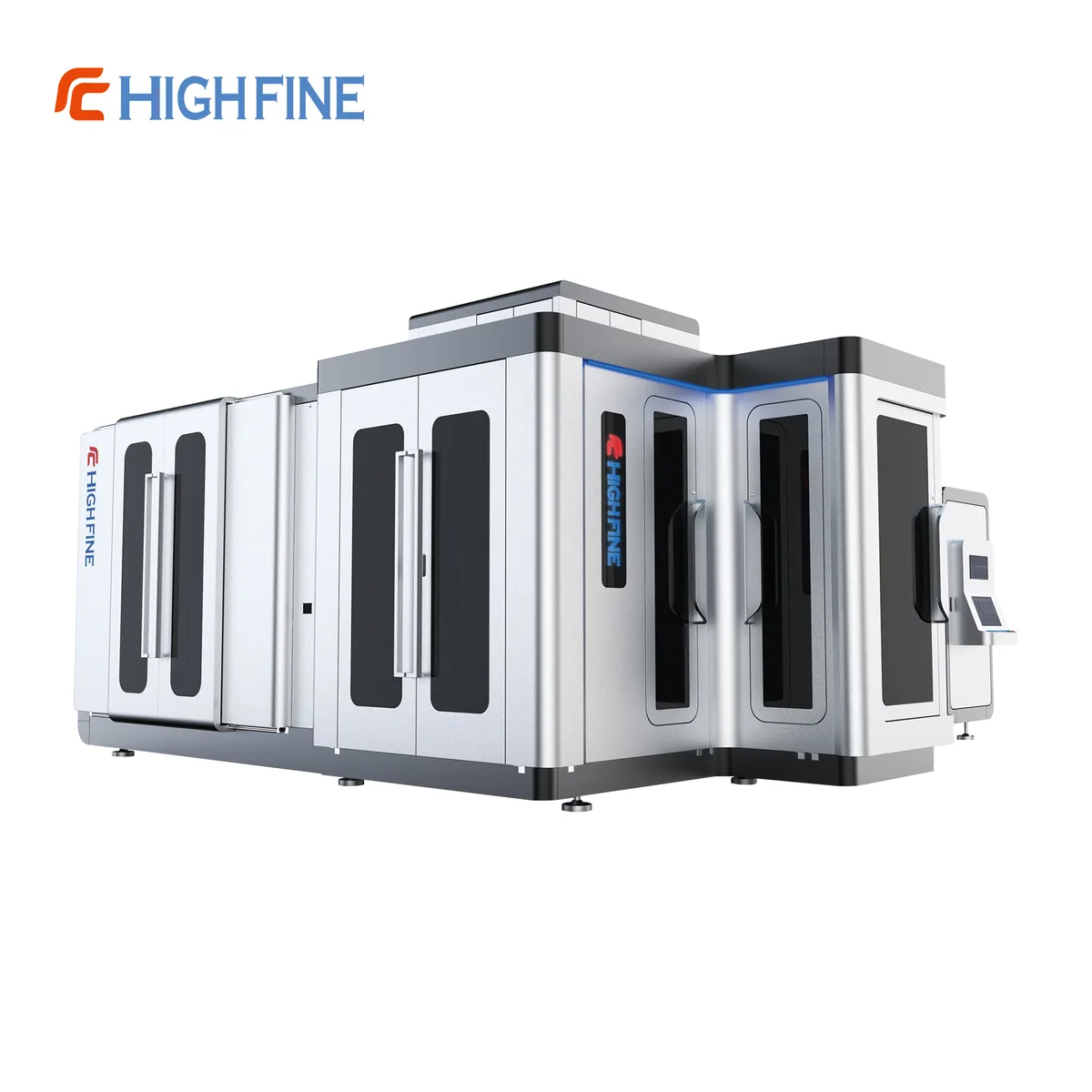
Blow-fill-seal technology is used to produce sterile liquid preparations in PP/PE vials. The BFS machine forms the vial from thermoplastic material, fills the vial, and seals it in an aseptic environment. The process is relevant for pharmaceutical and cosmetic injectables where container integrity and aseptic protection are central to product quality.
HIGHFINE’s BFS machine range includes a continuous model and a shuttle model. Both are intended for aseptic production, but they differ in design approach, output goals, material waste profile, vial compatibility, and sterility assurance features.
Continuous vs. Shuttle BFS Machines
Continuous BFS Machine
The continuous BFS machine is designed around a dual-mode design that increases output by 60%. It is used for sterile vial filling and produces sterile liquid preparations in PP/PE vials with aseptic protection. Compared with shuttle-type machines, the continuous model reduces material waste by 20%. It is validated for pharmaceutical and cosmetic injectables and is GMP-compliant.
Key points for buyer review:
- Dual-mode design increases output by 60%.
- Sterile vial filling for sterile liquid preparations.
- Produces sterile liquid preparations in PP/PE vials with aseptic protection.
- Reduces material waste by 20% versus shuttle-type machines.
- Validated for pharmaceutical and cosmetic injectables.
- GMP-compliant construction and operation.
The continuous model may suit projects where output targets and material waste reduction are high priorities. Procurement teams should still confirm vial format, material compatibility, line integration, and validation documentation against the specific product and plant requirements.
Shuttle BFS Machine
The shuttle BFS machine automates blowing, filling, and sealing under an aseptic environment. It is compatible with diverse vial types and materials. The machine achieves 99.9% sterility assurance via A-grade air-shower protection. Extrusion, forming, filling, and sealing happen in one ISO Class 5 environment. The design reduces cross-contamination to <=0.1%.
Key points for buyer review:
- Automates blowing, filling, and sealing under aseptic conditions.
- Compatible with diverse vial types and materials.
- Achieves 99.9% sterility assurance via A-grade air-shower protection.
- Extrusion, forming, filling, and sealing occur in one ISO Class 5 environment.
- Reduces cross-contamination to <=0.1%.
The shuttle model may be considered when vial-type flexibility and a defined aseptic protection strategy are central. As with any BFS machine, final selection should be based on product requirements, container design, utility planning, and the plant’s GMP compliance approach.
Container Materials: PP and PE Vials
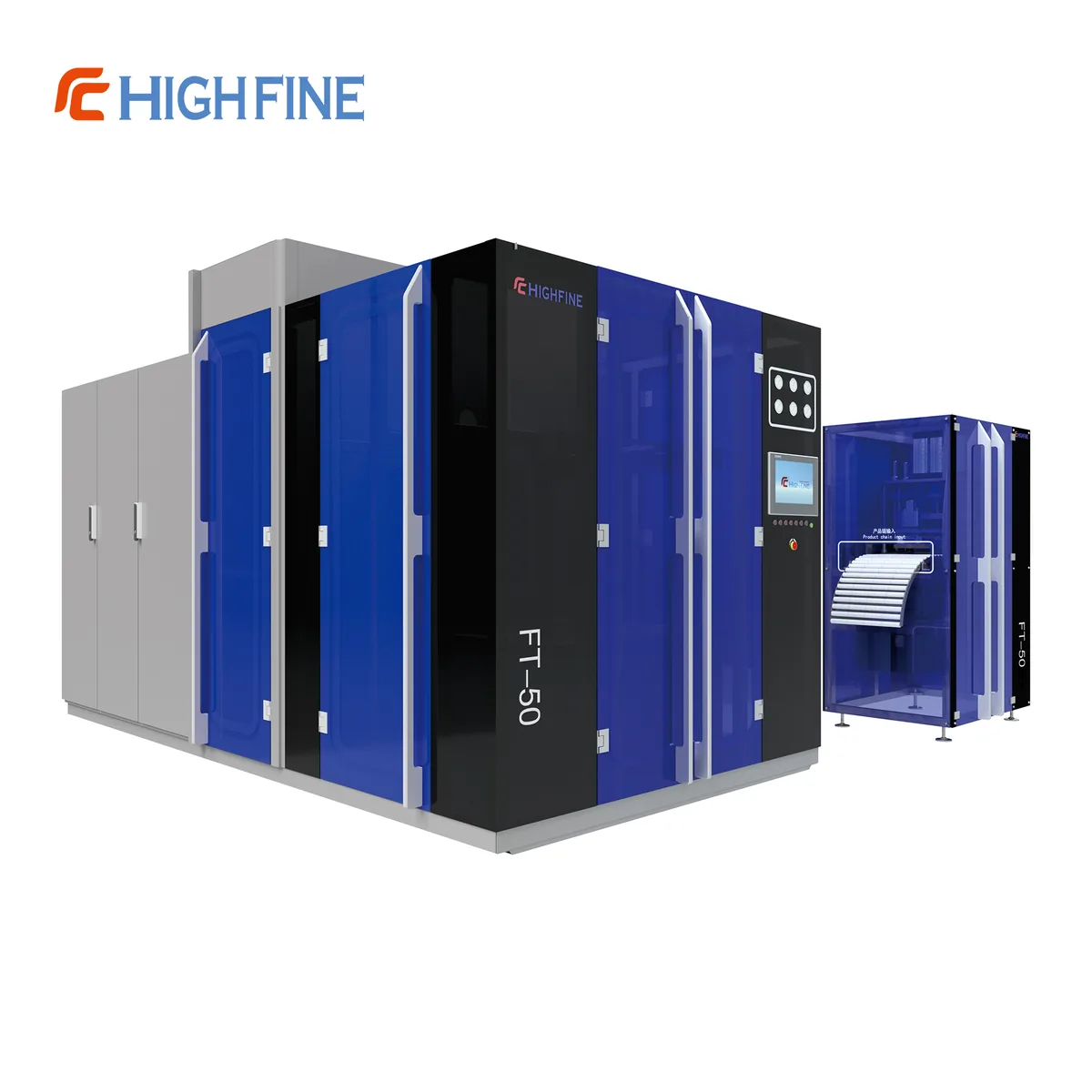
HIGHFINE’s continuous BFS machine produces sterile liquid preparations in PP/PE vials, and the shuttle model is compatible with diverse vial types and materials. PP and PE are commonly evaluated for BFS containers because they can be formed, filled, and sealed within the aseptic cycle. Material selection should be reviewed against the formulation, container design, sterilization strategy, and regulatory requirements for the intended market.
Sterility Assurance and Aseptic Protection
For the continuous BFS machine, sterile vial filling and aseptic protection are central to the design. For the shuttle BFS machine, A-grade air-shower protection supports 99.9% sterility assurance, while extrusion, forming, filling, and sealing take place in one ISO Class 5 environment. The shuttle design also reduces cross-contamination to <=0.1%.
These features should be reviewed together with the plant’s overall contamination control strategy, operator flow, material transfer, environmental monitoring, and validation plan. Certificates available upon request.
Applications for BFS Machines
BFS machines are used for sterile liquid preparations and injectables. HIGHFINE’s BFS machine models are validated for pharmaceutical and cosmetic injectables, with applications in pharmaceutical production, medical aesthetics, and cosmetic injectables. The continuous model is specifically described for sterile liquid preparations in PP/PE vials with aseptic protection, while the shuttle model supports diverse vial types and materials.
Integration with WFI and Purified Water Supply
A BFS machine does not operate in isolation. It depends on upstream preparation and water systems, and it must be integrated with filling line utilities and aseptic production workflows. HIGHFINE also builds water systems, preparation systems, and filling lines, so BFS can be integrated with upstream utilities, including WFI and purified water supply.
For project planning, procurement and engineering teams should define the water system interface, preparation system requirements, filling line layout, and aseptic transfer strategy early. This helps align the BFS machine with the broader production train and avoids late-stage utility changes.
Buyer Checklist for a BFS Machine
- Define the product type: sterile liquid preparations, pharmaceutical injectables, or cosmetic injectables.
- Choose between continuous and shuttle BFS machine designs based on output goals, vial types, and waste reduction priorities.
- Confirm PP/PE vial compatibility and the required container format.
- Review the sterility assurance approach, including A-grade air-shower protection and ISO Class 5 environment where applicable.
- Compare cross-contamination targets, including <=0.1% for the shuttle model.
- Plan integration with WFI and purified water supply, preparation systems, and filling lines.
- Confirm GMP compliance requirements and request certificates available upon request.
- Plan validation, documentation, operator training, and after-sales support.
FAQ
What is a BFS machine?
A BFS machine performs blowing, filling, and sealing in one aseptic cycle. It is used to produce sterile liquid preparations in PP/PE vials and other compatible containers.
What BFS machine models does HIGHFINE offer?
HIGHFINE offers two models: a continuous BFS machine and a shuttle BFS machine.
Can the continuous BFS machine reduce material waste?
Yes. The continuous BFS machine reduces material waste by 20% versus shuttle-type machines, according to the product brief.
How does the shuttle BFS machine support sterility assurance?
The shuttle BFS machine achieves 99.9% sterility assurance via A-grade air-shower protection. Extrusion, forming, filling, and sealing happen in one ISO Class 5 environment, and cross-contamination is reduced to <=0.1%.
Can a BFS machine be integrated with WFI or purified water systems?
Yes. HIGHFINE also builds water systems, preparation systems, and filling lines, so BFS can be integrated with upstream utilities, including WFI and purified water supply.
Are certificates available?
Certificates available upon request.
Next Step: Get a System Quote
Get a System QuoteTalk to a Water System Engineer
Start the conversation
Get a System Quote
Send your URS; our engineers reply with a P&ID-level proposal.