For pharmaceutical manufacturers, Water for Injection (WFI) generation is a critical utility operation. Distillation remains a reference method for WFI because the phase-change process, combined with effective entrainment separation, is well established for producing pyrogen-free water and supporting compliance with pharmacopeial expectations such as USP, EP, and JP requirements. A multi effect water distiller applies this principle with cascaded thermal reuse, helping pharmaceutical plant engineers balance water quality, energy demand, and validation scope.
HIGHFINE PHARMATECH CO., LTD is a Sino-foreign joint venture founded in 1992 and based at No. 379 Zhonghua East Road, Haimen City, Jiangsu Province, China. The company offers three multi effect water distiller series for WFI generation: the B-Series, F-Series, and S-Series. Each series is positioned around different evaporation, control, separation, and documentation priorities. The series are designed for GMP/USP/EP/FDA compliance. Certificates available upon request.
Why Distillation Remains a Reference WFI Method
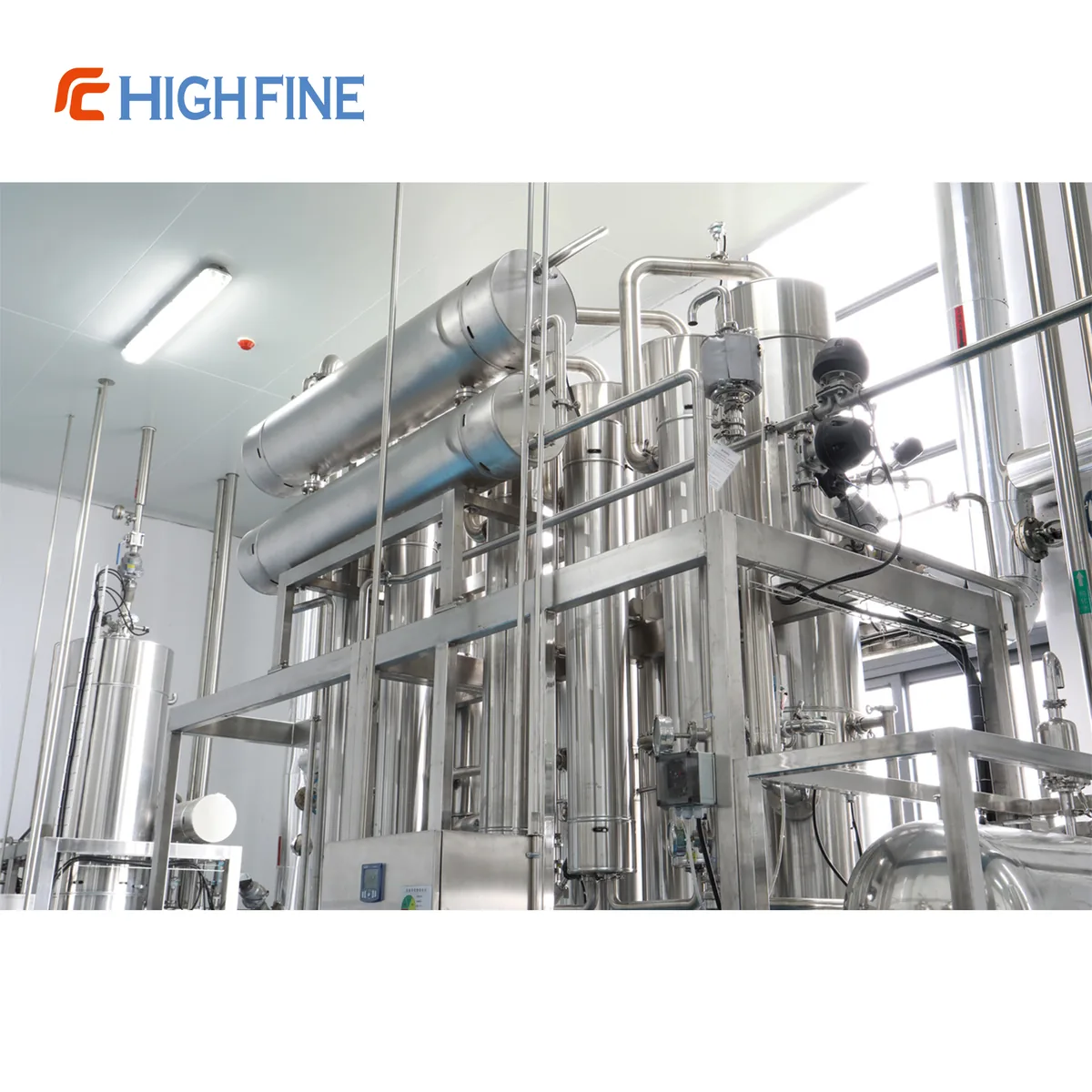
WFI production requires control of chemical impurities, microbial content, and endotoxins. Distillation is valued because vaporization leaves nonvolatile contaminants behind, while proper separation prevents droplets and entrained impurities from carrying over into the condensate. For procurement teams, the key question is not simply whether distillation is accepted, but which multi effect water distiller configuration provides the right balance of water quality, steam use, materials, controls, and validation documentation for the intended plant.
Multi-effect distillation is not a single design. Rising-film and falling-film evaporation, separation strategy, control architecture, and documentation scope can differ significantly. The selection guide below summarizes the three series using the company’s stated design features.
How Multi-Effect Distillation Works
In a multi-effect water distiller, feed water is evaporated, and the resulting vapor is condensed as distilled water. Nonvolatile impurities and pyrogens remain in the liquid phase. The vapor must pass through effective separation to avoid entrainment, and the condensate must be managed under controlled conditions.
The “multi-effect” principle uses vapor from one effect to heat the next effect, reducing the external steam required compared with a single-effect arrangement. This is why cascaded thermal reuse is central to energy efficiency. Depending on the series, HIGHFINE PHARMATECH CO., LTD applies different design approaches:
- B-Series: rising-film evaporation achieving 100% heat transfer, producing pyrogen-free water, with 20% steam savings through precise feed-water distribution and maintenance-free diversion separation.
- F-Series: Siemens S7 control system, Level 3 centrifugal separation, pharmaceutical-grade WFI production, continuous gas/liquid discharge, and FAT validation for cGMP compliance.
- S-Series: falling-film evaporation with multi-effect design, 316L stainless steel construction with 0.6 micrometer Ra mirror-polished pipelines, producing pyrogen-free WFI, 20% steam savings via cascaded thermal reuse, fully compliant with USP/EP standards, and supplied with full validation documentation.
Selection Guide: B-Series, F-Series, and S-Series
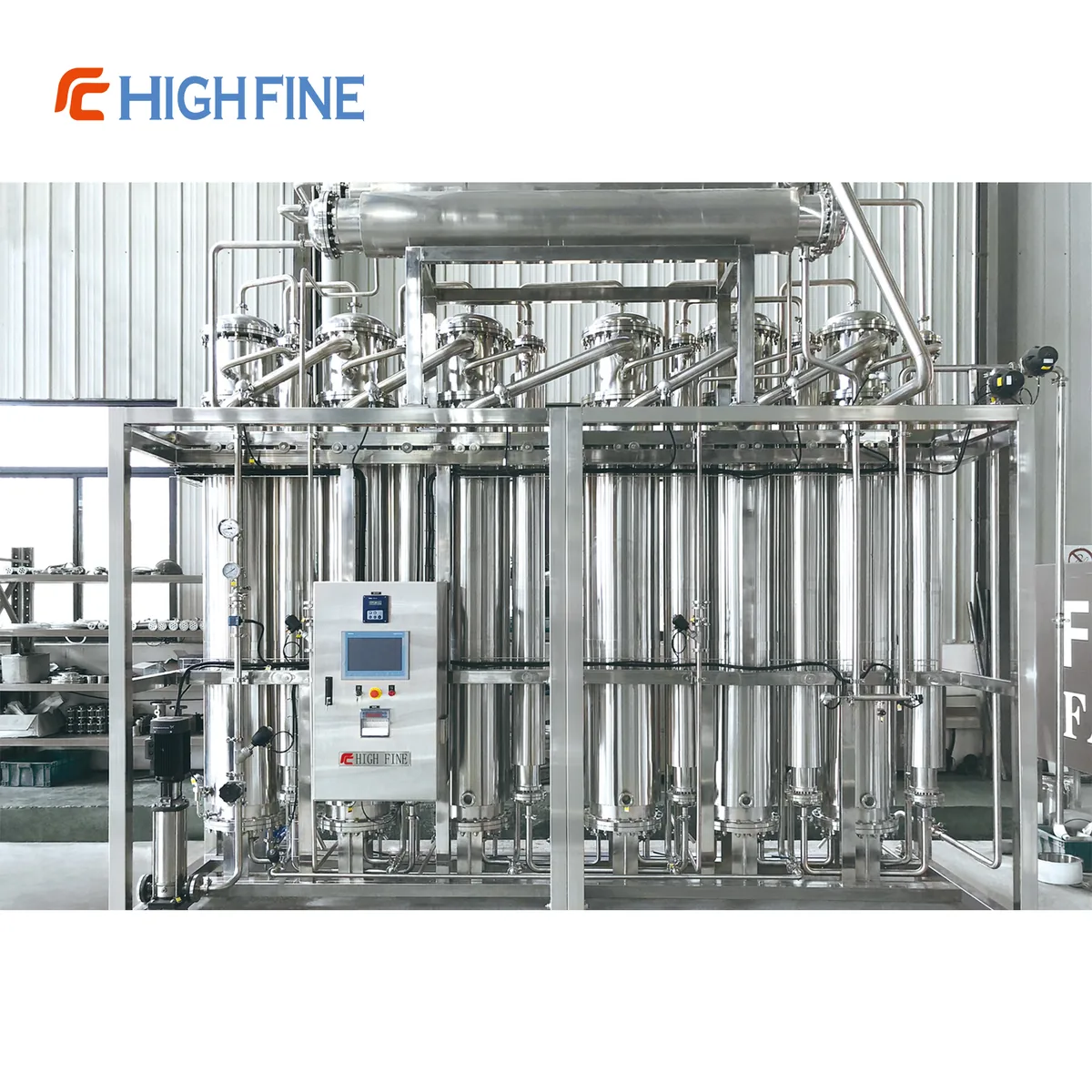
B-Series: Rising-Film Evaporation and Feed-Water Distribution
The B-Series is the choice to review when rising-film evaporation and heat-transfer performance are primary selection criteria. It achieves 100% heat transfer and produces pyrogen-free water. Its 20% steam savings are linked to precise feed-water distribution, and the design includes maintenance-free diversion separation. For buyers comparing a multi effect water distiller for robust WFI generation, the B-Series should be evaluated where rising-film evaporation aligns with the plant’s utility and validation strategy.
F-Series: Siemens S7 Control and Centrifugal Separation
The F-Series is positioned around control and separation. It uses a Siemens S7 control system and Level 3 centrifugal separation to produce pharmaceutical-grade WFI. It also features continuous gas/liquid discharge and FAT validation for cGMP compliance. This series is relevant for projects where automation architecture, separation performance, continuous discharge, and factory acceptance validation are central procurement requirements.
S-Series: Falling-Film Design, 316L Construction, and Full Documentation
The S-Series uses falling-film evaporation with a multi-effect design. It is constructed in 316L stainless steel with 0.6 micrometer Ra mirror-polished pipelines and produces pyrogen-free WFI. It saves 20% steam via cascaded thermal reuse, is fully compliant with USP/EP standards, and is supported by full validation documentation. The S-Series should be reviewed when falling-film evaporation, specified surface finish, USP/EP compliance, and a comprehensive validation package are priorities.
Rising-Film vs. Falling-Film Evaporation
Rising-film and falling-film evaporation are different design approaches, and the choice should follow the project’s water quality requirements, utility profile, maintenance strategy, and documentation expectations. The B-Series uses rising-film evaporation and is stated to achieve 100% heat transfer. The S-Series uses falling-film evaporation with a multi-effect design and specifies 316L stainless steel construction with 0.6 micrometer Ra mirror-polished pipelines. The F-Series differentiates itself through the Siemens S7 control system, Level 3 centrifugal separation, continuous gas/liquid discharge, and FAT validation for cGMP compliance.
Energy Efficiency and Steam Savings
Steam consumption is a major operating consideration for WFI distillation. The B-Series saves 20% steam through precise feed-water distribution. The S-Series saves 20% steam via cascaded thermal reuse. These are series-specific design claims and should be reviewed against the actual utility integration, feed-water conditions, and operating strategy of the project. For procurement teams, the comparison should include both the stated steam savings and the supporting design features, such as multi-effect configuration, feed-water distribution, and thermal reuse.
Materials and Surface Finish
Material selection and surface finish are especially important for WFI systems. The S-Series is specified with 316L stainless steel construction and 0.6 micrometer Ra mirror-polished pipelines. For the B-Series and F-Series, material and finish requirements should be confirmed during the technical review. A multi effect water distiller selection should always align the wetted-material specification, surface finish, and validation documentation with the plant’s GMP and pharmacopeial requirements.
Validation Documentation and Compliance Support
The three series are designed for GMP/USP/EP/FDA compliance. The F-Series includes FAT validation for cGMP compliance. The S-Series is fully compliant with USP/EP standards and is supplied with full validation documentation. Documentation scope should be confirmed during quotation and technical review. Certificates available upon request.
Buyer Checklist for Multi Effect Water Distiller Selection
- Define the required WFI quality, pharmacopeial references, and intended process use.
- Confirm feed-water pretreatment and utility integration requirements before selecting a series.
- Decide whether rising-film evaporation, falling-film evaporation, or a control/separation-led design is preferred.
- For the B-Series, review 100% heat transfer, pyrogen-free water production, 20% steam savings through precise feed-water distribution, and maintenance-free diversion separation.
- For the F-Series, review the Siemens S7 control system, Level 3 centrifugal separation, pharmaceutical-grade WFI production, continuous gas/liquid discharge, and FAT validation for cGMP compliance.
- For the S-Series, review falling-film multi-effect design, 316L stainless steel construction, 0.6 micrometer Ra mirror-polished pipelines, 20% steam savings via cascaded thermal reuse, USP/EP compliance, and full validation documentation.
- Confirm the required validation documentation package and request certificates as needed.
- Review commercial scope, documentation deliverables, and acceptance criteria before order.
FAQ
Is a multi effect water distiller suitable for WFI generation?
Distillation is a recognized reference method for WFI. The B-Series produces pyrogen-free water, the F-Series produces pharmaceutical-grade WFI, and the S-Series produces pyrogen-free WFI. The final selection depends on the plant’s quality, utility, control, and documentation requirements.
Which series should I choose?
Choose the B-Series when rising-film evaporation, 100% heat transfer, and 20% steam savings through precise feed-water distribution are central. Choose the F-Series when the Siemens S7 control system, Level 3 centrifugal separation, continuous gas/liquid discharge, and FAT validation for cGMP compliance are priorities. Choose the S-Series when falling-film multi-effect design, 316L construction, 0.6 micrometer Ra mirror-polished pipelines, USP/EP compliance, and full validation documentation are required.
What documentation is available?
The F-Series includes FAT validation for cGMP compliance, and the S-Series includes full validation documentation. The series are designed for GMP/USP/EP/FDA compliance. Certificates available upon request.
How are steam savings achieved?
The B-Series saves 20% steam through precise feed-water distribution. The S-Series saves 20% steam via cascaded thermal reuse.
Get a System Quote or Talk to a Water System Engineer to review your WFI generation requirements and select the appropriate multi effect water distiller series.
Start the conversation
Get a System Quote
Send your URS; our engineers reply with a P&ID-level proposal.