The WFI distribution system is where water quality is either protected or lost. Generation establishes the starting purity, but storage and distribution determine whether that quality reaches every use point consistently. HIGHFINE PHARMATECH CO., LTD is a Sino-foreign joint venture pharmaceutical equipment manufacturer founded in 1992 and based at No. 379 Zhonghua East Road, Haimen City, Jiangsu Province, China. The company supplies WFI generation through multi-effect distillation B/F/S series and vapor compression distillation producing 0.05 microS/cm WFI, and engineers the complete chain: generation, storage, and distribution loops. For plant engineers and procurement teams, the selection task is to align hygienic design, loop hydraulics, sanitization strategy, instrumentation, and validation documentation into one defensible system.
Storage Tank Design for WFI
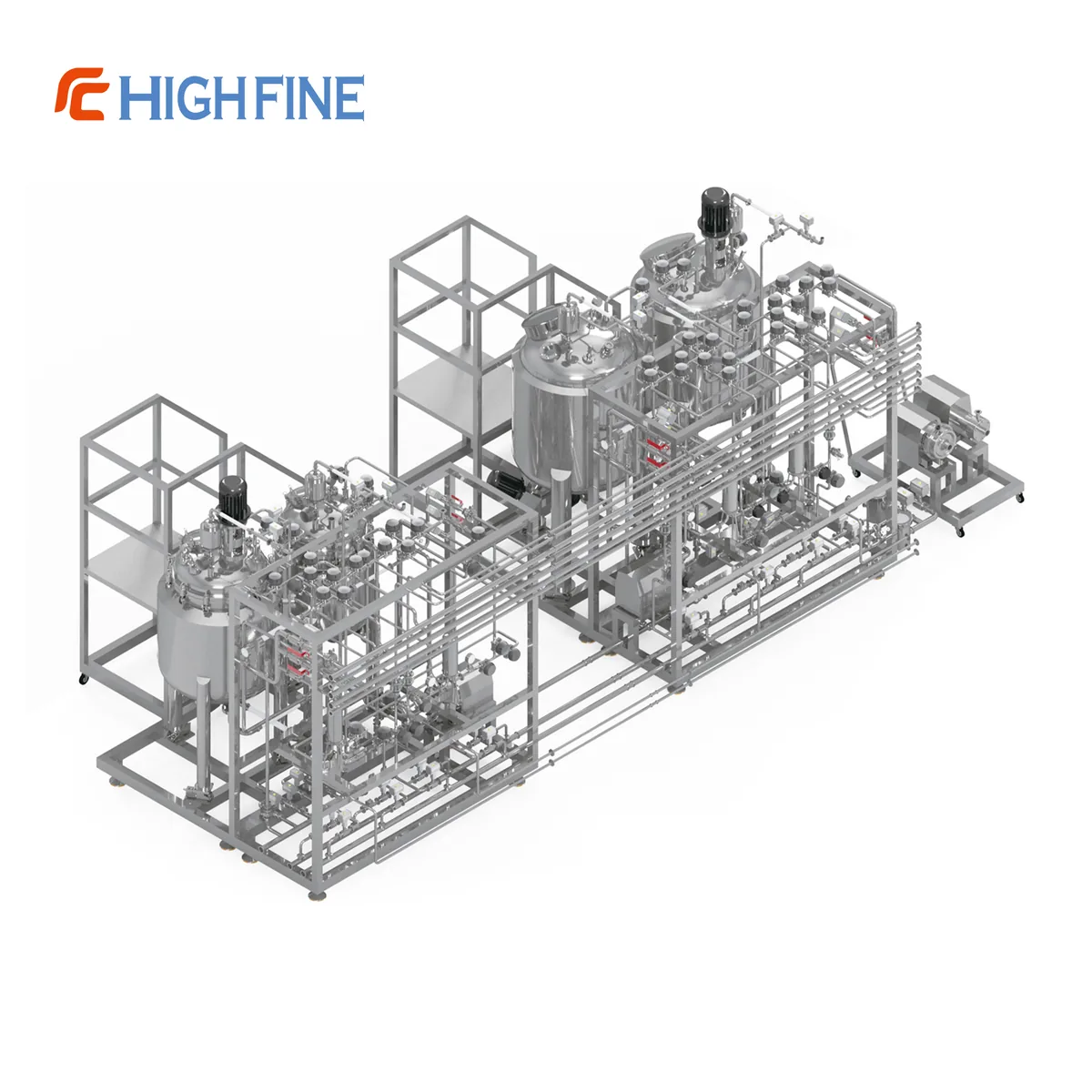
A WFI storage tank is not a passive vessel. It is the first buffer between generation and distribution, and its design should support microbial control, complete drainability, and effective sanitization. Hot storage is a common strategy for WFI because it helps limit microbial proliferation while supporting loop sanitization; the specific operating approach should be defined through the user requirement specification and validated by the end user.
Key tank design considerations include:
- Hygienic 316L stainless steel construction with surfaces specified for cleanability.
- Spray balls or comparable distribution devices to support complete wetting during sanitization and rinse cycles.
- Vent filtration to protect the tank headspace from airborne contamination while allowing proper pressure equalization.
- A tank geometry and outlet arrangement that support drainage and avoid stagnant zones.
- Instrumentation for level, pressure, temperature, and conductivity as required by the system design.
- Documentation that supports installation, operation, and qualification activities.
The tank should be reviewed together with the distribution loop. A well-designed tank cannot compensate for a poorly balanced loop, and a good loop cannot protect water from a tank with weak sanitization or vent protection.
Distribution Loop Principles
A WFI distribution system normally relies on continuous circulation to keep water moving through the loop and back to storage. The engineering goal is to maintain turbulent flow at use points and throughout the main loop where required by the design, while avoiding stagnation, excessive pressure drop, and unnecessary complexity.
Important loop principles include:
- Continuous circulation through the main loop and return line.
- Velocity targets established during engineering to support hygienic flow and loop balance.
- Dead-leg control through proper use-point valve arrangement and branch design.
- Slope and drainability so the loop can be fully drained and sanitized.
- Use-point design that supports sampling and operation without creating contamination pockets.
- Return-line routing that avoids low points, trapped sections, and unnecessary fittings.
The loop should be engineered as a hydraulic system, not assembled from isolated components. Pump selection, pipe sizing, use-point count, valve type, and return-line arrangement all affect circulation and sanitization performance. For a WFI distribution system, the buyer should expect a coordinated design that accounts for generation capacity, storage operation, and actual use-point demand.
Sanitization Strategies
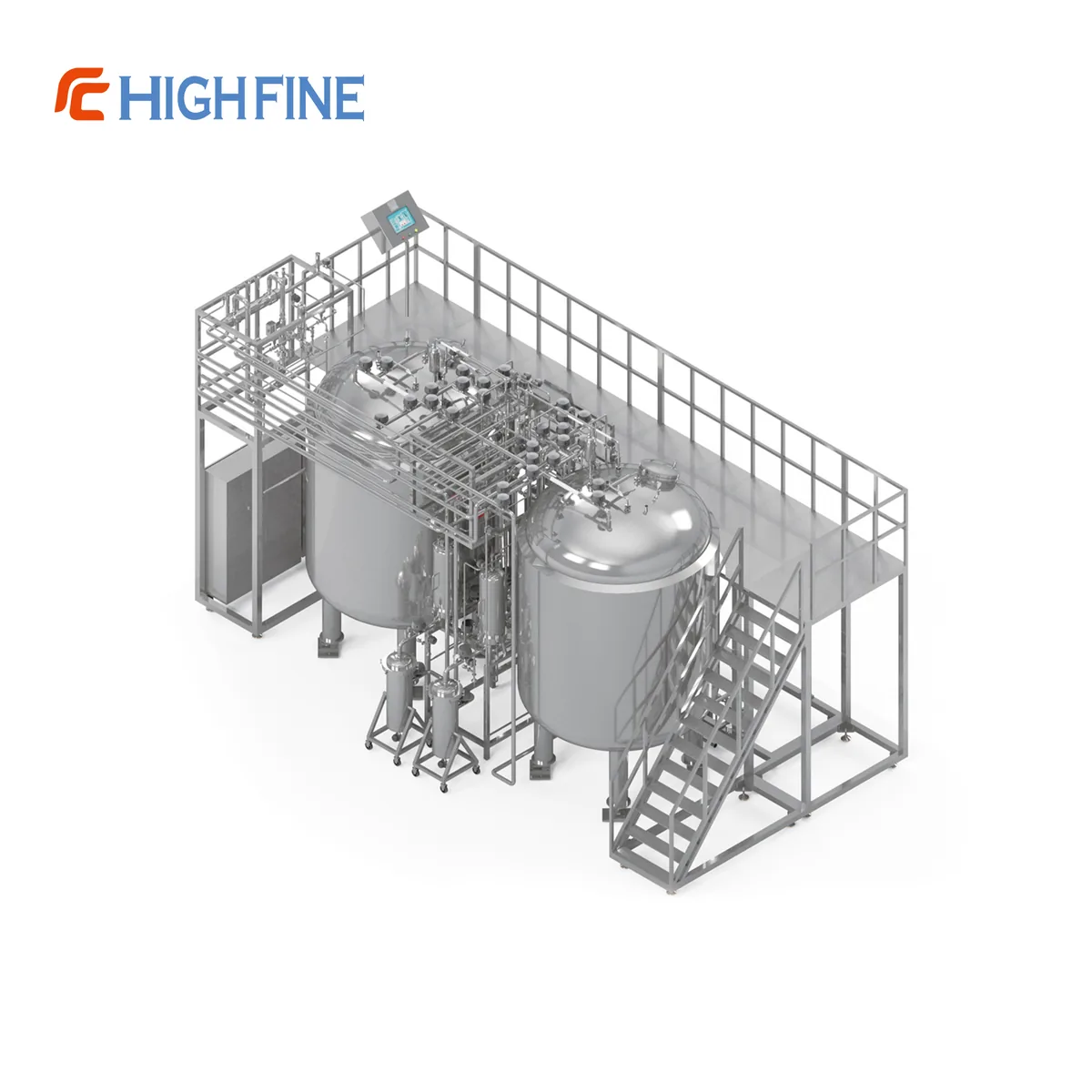
Sanitization strategy is a central selection decision. Common approaches include hot-water sanitization, ozone, and chemical sanitization. Each has implications for materials, instrumentation, operator safety, validation, and routine operation.
Hot-water sanitization is widely used in pharmaceutical water systems because it leaves no chemical residue and can be integrated into routine system operation. HIGHFINE PHARMATECH CO., LTD offers hot-water sanitization capability. For purified water systems, the company uses automated hot water disinfection that is chemical-free. Ozone and chemical sanitization may be considered where justified by the user requirement specification and validation strategy, but they require appropriate materials, monitoring, and safety controls.
The selected sanitization method should be defined early. It affects tank vent filtration, instrument selection, gasket materials, valve design, loop slope, and the validation documentation package. The method should also be compatible with the intended operating schedule and the plant’s maintenance capability.
Materials and Surface Finish
HIGHFINE PHARMATECH CO., LTD supplies hygienic design in 316L stainless steel. For WFI storage and distribution, material selection should support corrosion resistance, cleanability, and repeated sanitization. Surface finish should be specified to support cleaning and validation; the exact finish requirement should be agreed in the technical specification rather than assumed.
Fabrication quality matters as much as material grade. Weld quality, component selection, gasket compatibility, and internal surface condition all influence the loop’s ability to maintain WFI quality. The buyer should review the proposed bill of materials, valve types, instrumentation wetted parts, and documentation package together.
Instrumentation and Sampling Points
Instrumentation should be selected to support routine monitoring and validation without creating dead legs or unnecessary contamination risks. Typical loop instrumentation may include conductivity, total organic carbon, flow, pressure, and temperature measurement, depending on the system design. Sampling points should be located to represent the loop and use points effectively, and sampling valve design should support hygienic operation.
The instrumentation plan should be developed with the validation strategy. Critical alarms, trend data, and calibration requirements should be defined so that the system can be operated and qualified in a controlled manner. Digital records and alarm history can support investigations, but the final requirements should be specified by the end user and supplier during engineering.
Validation Considerations
Systems are designed for GMP, USP, EP, and FDA compliance requirements with validation documentation. Validation should cover the complete chain from generation through storage and distribution, including sanitization, monitoring, and use-point performance. Documentation typically supports installation qualification, operational qualification, and performance qualification, with traceability for materials, instruments, and critical components. Certificates available upon request.
The buyer should confirm that the validation documentation package matches the actual system configuration. A generic package is less useful than a project-specific package that reflects the installed loop, instrumentation, sanitization method, and control philosophy.
Buyer Checklist for a WFI Distribution System
- Define the user requirement specification, use-point schedule, and expected operating pattern.
- Confirm generation, storage, and distribution scope with one coordinated supplier.
- Review 316L stainless steel construction and hygienic component selection.
- Agree on hot-water, ozone, or chemical sanitization strategy and its validation impact.
- Confirm loop circulation, dead-leg control, slope, drainability, and sampling point locations.
- Review instrumentation, alarm strategy, and data requirements.
- Confirm validation documentation and project-specific traceability.
- Request Certificates available upon request.
- Verify address and company details: HIGHFINE PHARMATECH CO., LTD, No. 379 Zhonghua East Road, Haimen City, Jiangsu Province, China.
FAQ
What is the role of a WFI distribution system?
It stores and delivers WFI from the generation system to use points while maintaining quality through continuous circulation, hygienic design, sanitization, and monitoring.
How is microbial control maintained in the loop?
Microbial control depends on the combined design of hot storage, continuous circulation, sanitization strategy, vent filtration, dead-leg control, and routine monitoring. The specific approach should be validated for the intended system.
Can HIGHFINE PHARMATECH CO., LTD provide validation documentation?
Yes. Systems are designed for GMP, USP, EP, and FDA compliance requirements with validation documentation. Certificates available upon request.
What material is used for hygienic WFI distribution?
HIGHFINE PHARMATECH CO., LTD supplies hygienic design in 316L stainless steel. Surface finish and component selection should be confirmed in the project specification.
Does the company supply only the loop or the complete chain?
HIGHFINE PHARMATECH CO., LTD supplies WFI generation and engineers the complete chain: generation, storage, and distribution loops.
Get a System QuoteTalk to a Water System Engineer
Start the conversation
Get a System Quote
Send your URS; our engineers reply with a P&ID-level proposal.