Purified water is the most widely used compendial water grade in pharmaceutical manufacturing. It is an excipient in liquid dosage forms, a cleaning agent, final rinse for CIP circuits, and feedwater for higher grades. Yet purified water systems remain a common source of inspection findings, downtime, and lifecycle cost overruns—often because decisions were made from an equipment quotation rather than a documented design process.
This guide covers purified water system design in pharmaceutical industry projects for plant engineers and procurement teams: writing a verifiable URS, structuring pretreatment, choosing RO configuration, selecting EDI or mixed bed, managing storage and distribution risk, and avoiding recurring mistakes.
Start With the URS, Not the P&ID
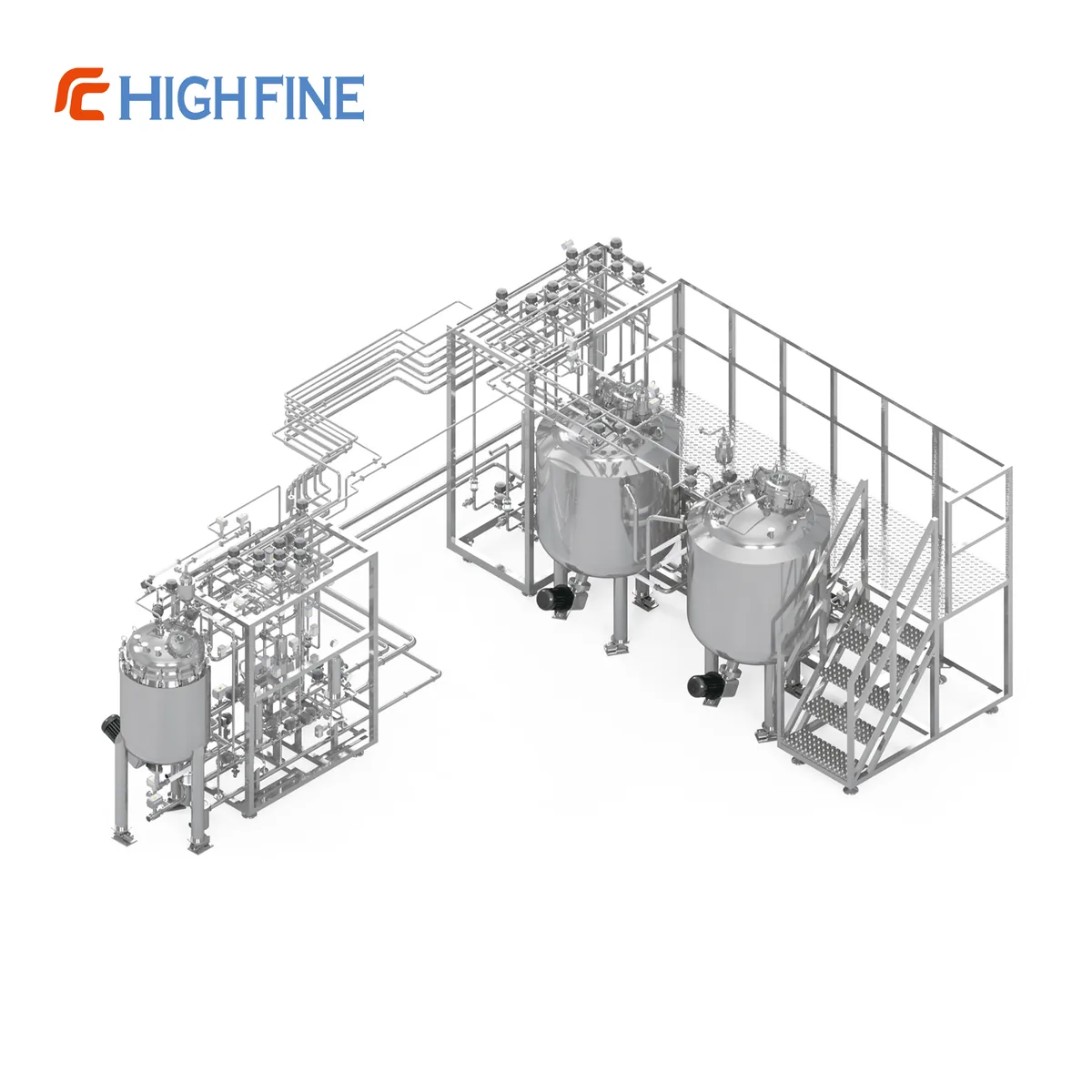
The User Requirement Specification is the foundation. Every downstream decision—RO array, loop velocity, valve type, sanitization method—should trace to a requirement. If the URS is thin, the supplier designs to its standard product and gaps surface during qualification.
A defensible URS covers intended uses and the water quality standard (USP, EP, JP, or the most stringent market), including whether water is for formulation, cleaning, CIP final rinse, laboratory use, or feed to a still or electrodeionization stage. It defines average and peak demand, simultaneous draw, cleaning shifts, and future headroom. It characterizes feedwater—municipal, well, or purchased permeate—including seasonal variation. It sets sanitization philosophy because hot-water or chemical sanitization drives materials, heat exchanger scope, and tank/loop design. It specifies wetted material grade, elastomer compatibility, measurable finish, weld quality, instrumentation, alarms, interlocks, audit trails, electronic records, qualification documentation, FAT/SAT, material certificates, weld maps, and turnover format.
Acceptance criteria must be testable. “Meets pharmacopeia” is not a test method; each requirement should map to verification. Have the supplier respond clause by clause with a compliance statement and deviation list.
Designing the Pretreatment Train
Pretreatment protects RO membranes and delivers consistent feed. It is often under-specified because it sits upstream of the “interesting” technology.
Typical elements, selected against feedwater analysis, include multimedia or multi-grade filtration for suspended solids, activated carbon or bisulfite dosing for dechlorination, softening or antiscalant dosing for hardness, and cartridge filtration as a membrane guard. Dechlorination is not optional: thin-film composite membranes are damaged by free chlorine, and damage is cumulative and irreversible. Specify how chlorine removal is verified during operation, not only at commissioning. Carbon beds are a microbial habitat; they remove chlorine but provide surface area and adsorbed organics for biofilm. Pretreatment needs its own sanitization or replacement strategy and should minimize stagnant sections and long idle periods. A break tank can improve flexibility but adds a storage point that must be managed.
Reverse Osmosis: Single Pass or Double Pass
RO removes dissolved ions, organics, colloids, bacteria, and endotoxin enough to make downstream polishing practical.
Single-pass RO fits stable, good feedwater, downstream EDI or mixed bed, and final quality comfortably achievable in one stage. It has the simplest footprint and lowest energy demand. Double-pass RO is appropriate for high or variable feed total dissolved solids, a required second barrier, high recovery, or downstream polishing sensitive to carbon dioxide and residual ions. It also adds redundancy.
Design around recovery versus scaling risk: higher recovery reduces wastewater but concentrates sparingly soluble salts, so array configuration and antiscalant program must be designed together and concentrate disposal defined early. Review flux balance; unequal flux accelerates fouling. Ask for projected flux per element at design and worst-case conditions. Minimum instrumentation includes feed and permeate conductivity, oxidation-reduction potential, differential pressure across each stage, and temperature compensation. Membrane preservation for standby and shutdown matters as much as on-stream design.
For teams weighing configurations, HIGHFINE PHARMATECH CO., LTD's purified water systems include an RO+EDI configuration producing 15 MΩ·cm water and a two-stage RO+EDI configuration delivering ≤0.1 µS/cm, ≤100 ppb TOC, and ≤20 cfu/mL.
EDI vs Mixed Bed: The Real Trade-Off
Both polish RO permeate to purified water quality. The choice is usually about operating model rather than water quality.
Electrodeionization runs continuously, regenerates electrically in situ, uses no regeneration chemicals, and produces consistent quality that is easy to trend. It eliminates acid and caustic handling, resin transport, and neutralization. Limitations include capital cost, sensitivity to upstream hardness, carbon dioxide, and free chlorine, and the need for well-designed RO upstream; EDI is a polishing step, not a primary demineralizer.
Mixed-bed deionization can deliver very high resistivity and may be cheaper at small scale or intermittent duty. It brings batch regeneration, chemical storage and dosing, resin replacement, quality decay between regenerations, and a cyclic operating pattern that is harder to validate and trend. Selection criteria include chemical handling policy, operator availability, wastewater discharge permits, expected hours of operation, and downtime cost. For continuous operation and minimal chemical footprint, EDI is generally stronger; for low intermittent duty, mixed bed can make economic sense. A frequent hybrid is EDI followed by polishing or ultrafiltration for particulate and endotoxin control.
Storage Tank Design
The storage tank is a buffer, hydraulic decoupler, and critical microbial control point.
Capacity should derive from demand profile and required loop turnover, not a rule of thumb. Oversized tanks increase residence time and biofilm risk; undersized tanks starve the loop during peak draw. Specify a hydrophobic, sanitizable vent filter protected against condensate and include it in sanitization and integrity testing. Geometry should be drainable: conical or dished bottom, low-point drain, correctly oriented nozzles, and no dead legs at instrument ports. If spray-sanitized, verify spray ball coverage at commissioning. Use non-invasive or sanitary level measurement. Ambient storage minimizes energy use but increases microbial risk; heated storage or nitrogen blanketing can help where TOC or oxygen sensitivity matters.
Distribution Loop Hydraulics
Most purified water excursions originate in the loop. The objective is continuous turbulent flow through all wetted paths with no stagnant branches.
Define dead-leg criteria in the URS as a relationship between branch length and tube diameter, and show compliance on isometrics. Specify velocity targets and verify them at commissioning, including return leg and hydraulically most remote point. Model simultaneous use: a loop turbulent with no draw may fall out of turbulent flow when several points open. Use sanitary centrifugal pumps with variable frequency drives, sized for minimum return flow that maintains velocity, with redundancy matched to downtime tolerance. Provide flow meters, balancing valves, and pressure indication for rebalancing after modifications. Cooled loops need sanitary heat exchangers with leak-protection philosophy; hot loops need use-point coolers or validated cooling. Every line should drain to a defined low point.
Materials, Surface Finish, and Fabrication
Wetted surfaces should be 316L stainless steel, with 304 acceptable for external surfaces and supports. Supply mill certificates with heat-number traceability. Elastomers must be compatible with the sanitization method; an EPDM gasket selected for ambient service may not tolerate repeated hot-water cycles.
Write surface finish as a measurable acceptance criterion. Mechanical polishing and electropolishing each have a place; specify according to product-contact risk and cleaning regime rather than defaulting to the most expensive option. Weld quality is equally important: orbital welding with documented parameters, weld logs, and boroscopic inspection on a defined sampling basis. Passivation after fabrication and after field modification should be contractual. Zero-static diaphragm valves, sanitary clamp connections, and correct instrumentation tee orientation remove small dead volumes that become microbial reservoirs.
Instrumentation and Monitoring
Monitor ionic, organic, and microbial quality.
Conductivity is the primary continuous measurement. Pharmacopeial conductivity requirements are typically demonstrated using the staged USP approach with correct temperature compensation at each stage. In-line conductivity at RO permeate, EDI outlet, and loop return provides control and trend data. TOC at loop return is the standard continuous organic indicator; analyzers need calibration, validation, and defined response to out-of-limit results. Microbial monitoring uses grab samples at use points and return, with defined frequency, neutralization of residual sanitant, and applicable incubation. Trending is more informative than any single result. Flow, pressure, temperature, level, and filter differential pressure should be captured in a historian with appropriate alarms; data integrity controls should match site policy. Define the sampling plan before qualification.
Sanitization Strategy
Sanitization controls biofilm; it does not sterilize. Select the strategy at URS stage and validate it as a system property.
Hot-water sanitization is chemical-free, leaves no residue, and avoids rinse validation. It requires a sanitary heat exchanger, attention to thermal expansion and material compatibility, and a validated heating/cooling profile recorded for every cycle. It is preferred where chemical handling should be minimized. Chemical sanitization—peracetic acid, hydrogen peroxide, ozone, or chlorine-based agents—requires material compatibility review, residue testing, and neutralization or rinse verification. Ozone requires point-of-use destruction and careful materials selection. Define scope (pretreatment, RO skid, EDI, tank, loop, vent filters, sampling valves), frequency, acceptance criteria, record keeping, and deviation handling. Justify frequency by trends, not habit.
HIGHFINE PHARMATECH CO., LTD's purified water systems are designed for hot-water sanitization, for teams that want sanitization built into the equipment rather than retrofitted.
Common Design Mistakes
Recurring issues include: writing a URS that describes equipment instead of requirements; designing from one feedwater analysis with no seasonal envelope; underestimating simultaneous demand and losing turbulent flow at peak draw; accepting dead legs because relocation was inconvenient; specifying finish and weld quality without measurable criteria; omitting vent filters, sampling valves, and instrument ports from sanitization scope; selecting EDI without confirming upstream RO feed quality; treating TOC and conductivity sensors as standalone instruments rather than part of an alarm and interlock strategy; leaving data integrity and audit trail to automation without specification; deferring concentrate and regenerate disposal; failing to plan passivation for field weld modifications; and buying generation skid and loop from separate suppliers with no single design owner.
Supplier Selection and Documentation
Split scope is a technical risk. When generation skid, tank, and loop come from different vendors, hydraulic and sanitization responsibilities fall into gaps. A single accountable supplier for the full train simplifies qualification and gives one party to hold during performance testing. Whichever model you choose, define interface responsibilities for hydraulics and sanitization in the contract.
HIGHFINE PHARMATECH CO., LTD is a Sino-foreign joint venture pharmaceutical equipment manufacturer founded in 1992, as described on the company website, based at No. 379 Zhonghua East Road, Haimen City, Jiangsu Province, China. The portfolio covers RO with EDI and two-stage RO with EDI configurations, as well as purified water systems designed for hot-water disinfection. The company's equipment is exported to markets across South East Asia, the Middle East, Africa, Europe, and the Americas, as stated on the company website. Certificates available upon request.
Regardless of supplier, require design calculations, material certificates, weld logs and inspection records, instrument calibration certificates, FAT reports, and an as-built drawing set matching the installed system.
FAQ
Where should a purified water project start?
With the URS and a current, representative feedwater analysis. Pretreatment scope, RO configuration, polishing technology, tank size, loop design, and sanitization follow from those documents.
Single-pass or double-pass RO?
Single pass is usually sufficient when feedwater is stable and EDI or mixed bed follows. Double pass is indicated for high or variable feed dissolved solids, a required second barrier, or tighter feed quality for polishing.
EDI or mixed bed?
EDI suits continuous operation, minimal chemical handling, and easier trending. Mixed bed can be economical for low intermittent duty but brings regeneration chemicals, resin handling, and cyclic quality behavior.
Which sanitization method should we choose?
Hot-water sanitization is chemical-free and avoids residue testing, which is why many new systems specify it. Chemical methods remain viable where heat is impractical, provided material compatibility and residue verification are addressed.
How is compliance demonstrated?
Through documented design qualification traceable to the URS, installation and operational qualification, performance qualification with a defined sampling plan, and routine monitoring with trending and deviation handling.
What documentation is available?
Certificates available upon request. Request the specific documents your qualification protocol requires early so they can be included in the contract rather than negotiated at handover.
Which regions do you serve?
Southeast Asia, the Middle East, Africa, Europe, and the Americas.
Get a System Quote
Get a System QuoteTalk to a Water System Engineer
Start the conversation
Talk to a Water System Engineer
30+ years of pharma water projects. No sales script.