A water for injection plant is rarely a single machine. It is an integrated, validated system that spans generation, storage, distribution, and — in most modern facilities — pure steam for sterilization and SIP. When those blocks come from different vendors, the pharmaceutical plant engineer inherits the interfaces: water quality drift between generation and the loop, steam condensate that does not meet WFI expectations, mismatched documentation sets, and a qualification effort split across several suppliers.
HIGHFINE PHARMATECH CO., LTD has engineered complete WFI plants since 1992. As a Sino-foreign joint venture based at No. 379 Zhonghua East Road, Haimen City, Jiangsu Province, China, the company supplies generation equipment, 316L stainless steel storage and distribution loops, pure steam generators, and the validation documentation that ties them together — as one coordinated scope, delivered under a single factory acceptance test.
What a Complete WFI Plant Comprises
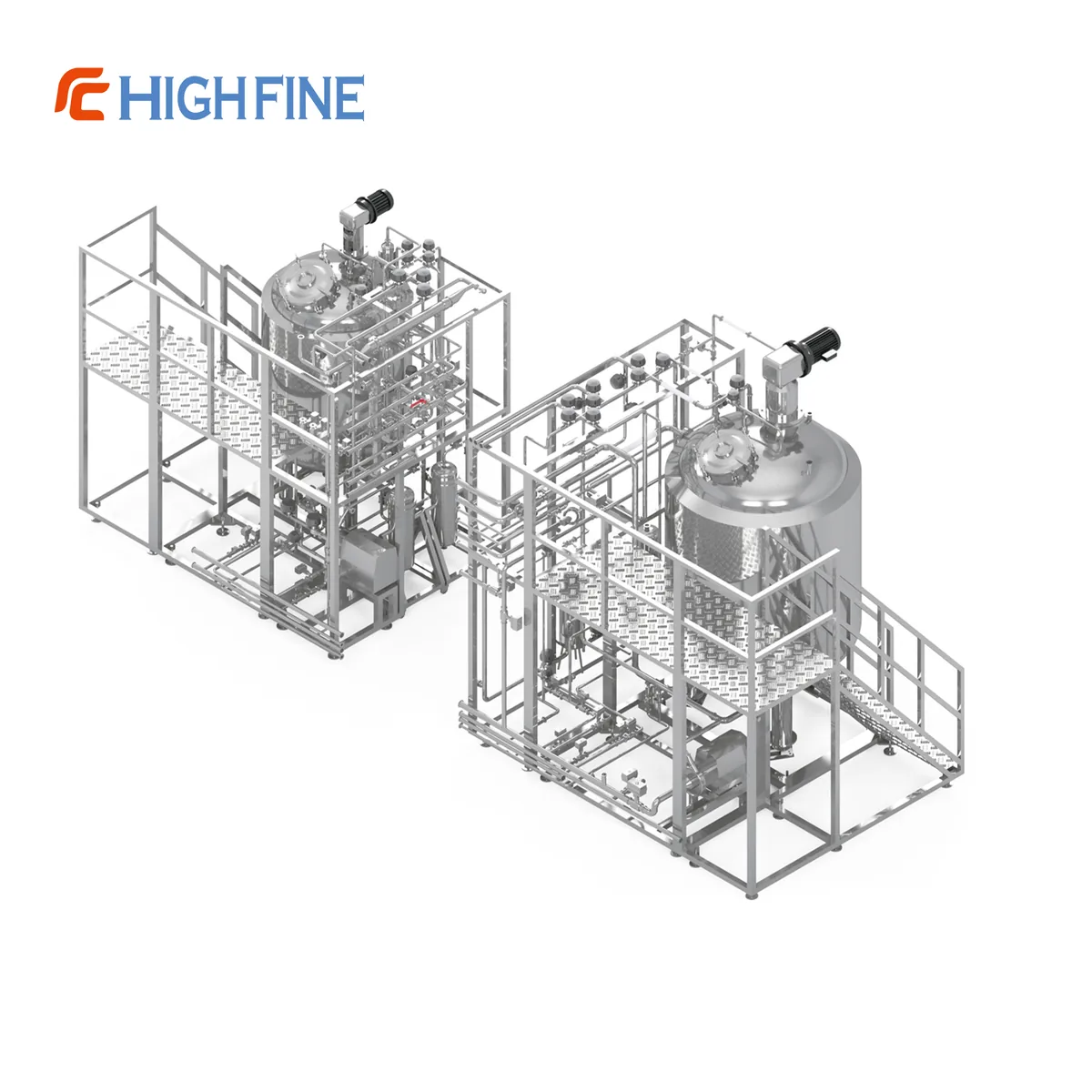
A turnkey water for injection plant delivered by HIGHFINE is organized into four engineering blocks, plus the documentation package that supports qualification:
- WFI generation — multi-effect distillation (B/F/S series) with rising-film or falling-film evaporation, or vapor compression distillation.
- WFI storage — 316L stainless steel storage integrated with the loop and its controls.
- WFI distribution — 316L stainless steel circulating loops serving points of use across the plant.
- Pure steam generation — sterile, pyrogen-free steam for sterilization and SIP, with WFI-compliant condensate.
- Validation documentation and FAT — factory acceptance testing, plus the records needed for site qualification.
WFI Generation: Distillation Options
Two distillation routes are available, and the right choice depends on your utilities, capacity profile, and site philosophy.
Multi-effect distillation (B/F/S series). These units are available with either rising-film or falling-film evaporation, so the evaporator configuration can be matched to the duty and to the operating preferences of your engineering team. Multi-effect designs use the latent heat of one effect to drive the next, which is the conventional approach where steam is available and predictable.
Vapor compression distillation. Where utility steam is constrained or operating cost is a priority, vapor compression distillation delivers approximately 70% steam savings while producing WFI at 0.05 microS/cm conductivity. For plants running long campaigns, that utility reduction is often the deciding factor in the selection.
Both routes are fed with purified water, consistent with standard pharmacopeial practice, and both are engineered as part of the wider plant rather than as standalone skids.
Storage and Distribution in 316L Stainless Steel
WFI is produced intermittently and consumed continuously, so storage and distribution carry as much compliance risk as generation itself. HIGHFINE supplies storage and distribution loops in 316L stainless steel, engineered as a single hydraulic and control system so that generation output, tank inventory, and loop recirculation are designed together rather than reconciled after installation.
Loop topology, point-of-use configuration, and the sanitization strategy are defined during design and reviewed against your user requirement specification, so the distribution design reflects how your facility actually operates — shift patterns, peak draw, idle periods, and cleaning windows — instead of a catalogue arrangement.
Pure Steam Generation for Sterilization and SIP
Sterilization and SIP are where water and steam systems meet, and where split vendor responsibility usually shows up first. HIGHFINE supplies pure steam generators producing sterile, pyrogen-free steam with WFI-compliant condensate and more than 99% contaminant removal. Because the pure steam generator and the WFI plant are engineered by the same team, the steam-side and water-side specifications are aligned from the start — a meaningful advantage when your autoclaves, SIP connections, and WFI loop are qualified together.
Project Execution: From URS to Qualification
A water for injection plant is delivered as a project, not a purchase order. The execution sequence typically runs:
- URS review — your user requirement specification is reviewed with the engineering team to fix scope boundaries between generation, storage, distribution, and pure steam.
- Design — system design, P&ID development, and documentation planning.
- FAT — factory acceptance testing, with validation documentation prepared in parallel.
- Installation — site installation support and interface coordination with your contractors.
- Commissioning — system start-up and performance verification against the design intent.
- Qualification support — support through IQ, OQ, and PQ, with the documentation package handed over in a form your QA group can work with.
Compliance Framework
Systems are designed for GMP, USP, EP, and FDA compliance requirements, with the documentation set built to support inspection. Certificates available upon request.
HIGHFINE has supplied pharmaceutical equipment since 1992, with markets in Southeast Asia, the Middle East, Africa, Europe, and the Americas. More than 10,000 machines installed and commissioned, as stated on the company website.
One Supplier for Water, Steam, and Validation
Buying generation, distribution, and pure steam from separate vendors is workable, but it moves the integration risk onto your project team. A single scope means one set of design assumptions, one interface between water and steam, one FAT, and one documentation structure that reads consistently from P&ID to qualification report. For procurement managers, it also means one commercial and technical point of contact from URS to handover.
FAQ
What is included in a turnkey WFI plant scope?
Generation, 316L stainless steel storage and distribution loops, pure steam generation, validation documentation, and FAT validation, coordinated as one engineering package.
Can the plant be specified for FDA-regulated markets?
Yes. Systems are designed for GMP, USP, EP, and FDA compliance requirements. Certificates available upon request.
Should we choose multi-effect or vapor compression distillation?
That depends on your utility steam availability and operating cost priorities. Vapor compression distillation offers approximately 70% steam savings. The selection is settled during URS review.
Do you support qualification on site?
Yes. Qualification support through IQ, OQ, and PQ is part of the project execution scope, alongside installation and commissioning support.
Do you supply outside China?
Yes. Equipment has been supplied to Southeast Asia, the Middle East, Africa, Europe, and the Americas.
Get a System Quote
Send us your user requirement specification and utility data, and our engineering team will define a turnkey water for injection plant scope covering generation, storage, distribution, and pure steam — with FAT and validation documentation included.
Get a System QuoteTalk to a Water System Engineer
Start the conversation
Get a System Quote
Send your URS; our engineers reply with a P&ID-level proposal.