A vapor compression distiller is the point in a pharmaceutical water train where energy cost, water quality, and validation burden meet. For plant engineers and procurement teams specifying a WFI generator, the choice usually narrows to two architectures: multi-effect distillation and vapor compression (VC) distillation. This page explains how VC distillation works, where it outperforms multi-effect stills, and how to evaluate a supplier before you issue a purchase order.
HIGHFINE PHARMATECH CO., LTD is a Sino-foreign joint venture pharmaceutical equipment manufacturer founded in 1992 and based at No. 379 Zhonghua East Road, Haimen City, Jiangsu Province, China. Our GMP-compliant vapor compression distiller produces USP/EP-grade Water for Injection and is designed for GMP, USP, EP, and FDA compliance requirements. Certificates available upon request.
How Vapor Compression Distillation Works
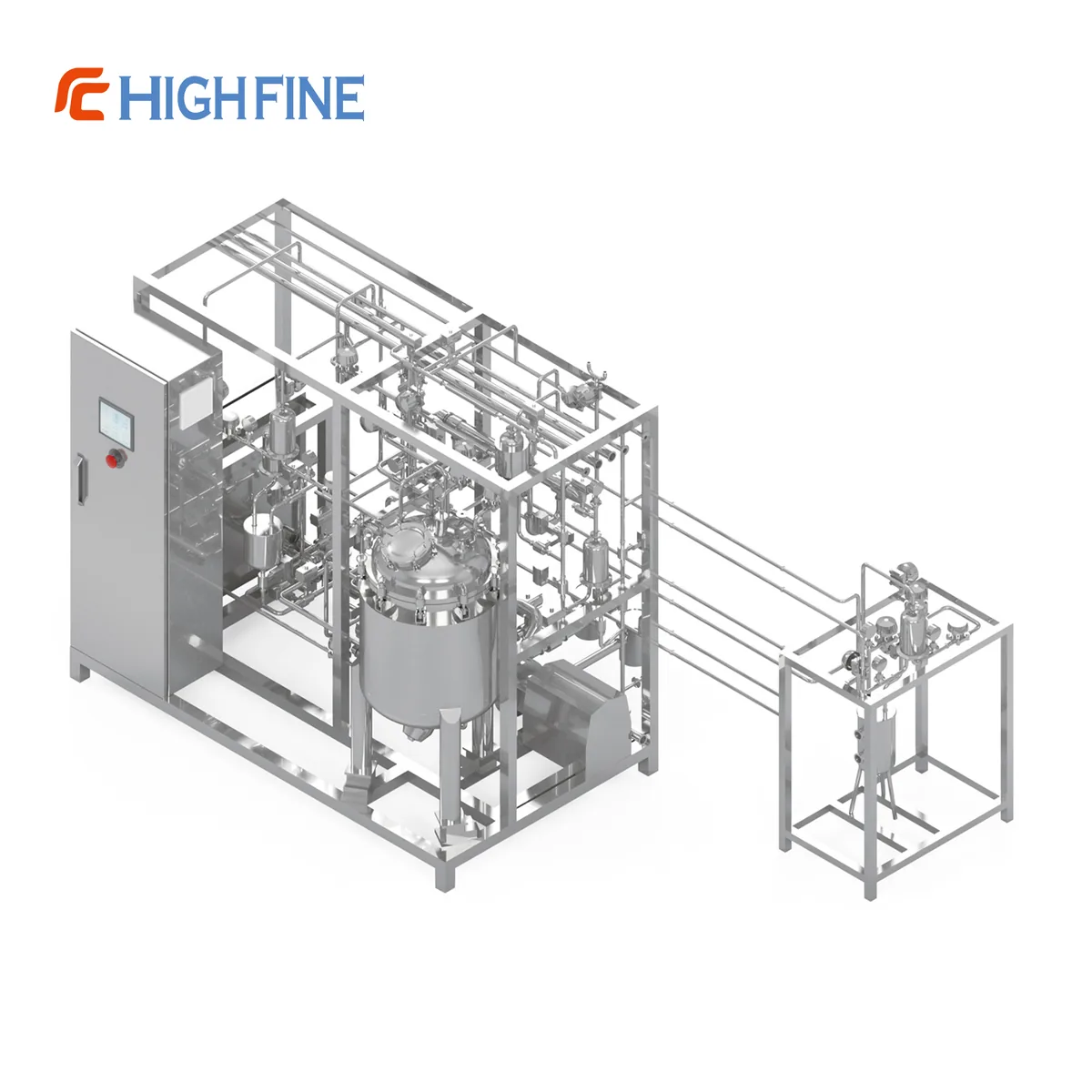
VC distillation relies on mechanical vapor recompression to recycle latent heat inside the unit rather than discharging it to a cooling loop.
- Feed water is evaporated in the evaporator sump, generating clean secondary vapor and leaving dissolved solids and pyrogens behind in the blowdown.
- A mechanical compressor draws that vapor from the evaporator and raises its pressure and saturation temperature.
- The compressed vapor is returned to the condensing side of the same heat exchanger, where it condenses into distilled water while releasing latent heat back into the boiling side.
- Because the latent heat is recovered internally, the unit needs only a small external energy input to drive the compressor — not a continuous supply of plant steam.
- Non-condensable gases are vented, and the distillate passes through a final stage before being delivered to the WFI storage loop.
The result is a compact, low-pressure operation with a tight energy balance and a distillate that consistently meets compendial WFI requirements.
Energy Performance Compared With Multi-Effect Stills
Multi-effect stills improve efficiency by reusing vapor across successive columns, but each additional effect adds height, footprint, and interstage piping, and the train still depends on a substantial plant steam supply. A VC distiller takes a different route: it achieves 70% steam savings versus conventional distillers by recycling latent heat mechanically instead of thermally.
For a facility where clean steam is a constrained utility, that difference is material. Fewer steam demands mean a smaller clean steam generator, less load on the boiler house, reduced cooling water consumption for the distillate cooler, and lower operating cost across the validated life of the equipment. The validated 30-year lifespan (as stated on the company website) makes the operating-cost differential the dominant term in the total cost of ownership calculation, not the initial capital outlay.
WFI Quality Attributes
Our VC distiller produces USP/EP-grade Water for Injection with 0.05 microS/cm conductivity and achieves 3-log endotoxin reduction. Distillation remains the most robust pharmacopeial technology for endotoxin control because the phase change itself excludes pyrogens, and the subsequent condensation and distribution stages are designed to preserve that barrier.
Compendial expectations for WFI — conductivity, total organic carbon, microbial limits, and endotoxin — are met by the combination of evaporation, vapor disengagement, and validated sanitization of the distillate path. Because the process operates at low pressure, thermal stress on the equipment is reduced and the hygienic condition of the evaporator is easier to maintain between sanitization cycles.
Where a VC Distiller Fits Best
- Capacity: VC units are typically favored at moderate to higher WFI demand, where the energy advantage compounds. Evaluate your peak and average draw against the unit's stated output envelope rather than sizing to peak alone.
- Utilities: Sites with limited clean steam capacity, high steam cost, or constrained cooling water benefit most. VC operation reduces both steam and cooling duties.
- Vaccine and cell culture plants: These applications are highly sensitive to endotoxin and to water quality variability, and they typically require validated, repeatable WFI quality. The 3-log endotoxin reduction and stable distillate conductivity of a VC unit suit both upstream media preparation and downstream formulation.
- Biotech and sterile fill facilities with a single central WFI loop and a preference for a self-contained, skid-mounted generator.
Where plant steam is abundant and cheap, or where very large capacities justify a multi-effect train, a multi-effect still may still be the right answer. The correct decision comes from a utility and lifecycle cost comparison, not from a default preference.
Materials and Hygienic Design
A distiller is only as good as its wetted surfaces and its drainability. When reviewing a design, confirm:
- Contact parts in appropriate stainless grades with documented surface finish and passivation
- Full drainability of the evaporator, condenser, and distillate lines, with no low points that trap water
- Sanitary connections throughout the distillate path and a defined sanitization strategy
- Access for inspection and, where required, boroscope examination of the evaporator
- Instrumentation suitable for validated monitoring of conductivity, temperature, and pressure
Validation and Documentation
Expect a documentation package that supports IQ/OQ/PQ execution in your facility: design and material certifications, surface finish records, instrument calibration certificates, P&ID and utility requirement drawings, operating and maintenance manuals, and a sanitization procedure. Certificates available upon request.
Confirm with your supplier how factory acceptance testing is performed, what data is recorded, and how the unit is preserved and shipped. For a validated 30-year asset (as stated on the company website), documentation quality determines how quickly you can respond to a deviation a decade after commissioning.
Buyer Checklist
- Define WFI demand profile (average, peak, and future expansion).
- Confirm feed water quality and pretreatment strategy.
- Compare steam and cooling utility consumption against a multi-effect alternative.
- Review wetted materials, surface finish, and drainability.
- Verify compressor and control philosophy, plus redundancy for critical instruments.
- Review the documentation package and validation deliverables.
- Confirm capacity envelope, footprint, and rigging requirements against your mechanical room.
- Request certificates and reference documentation from the supplier.
HIGHFINE PHARMATECH has supplied pharmaceutical water and process equipment to customers in Southeast Asia, the Middle East, Africa, Europe, and the Americas.
FAQ
Does a vapor compression distiller produce compendial WFI?
Yes. Our unit produces USP/EP-grade Water for Injection with 0.05 microS/cm conductivity and 3-log endotoxin reduction.
How much steam does a VC distiller save?
Compared with conventional distillers, our VC design achieves 70% steam savings by recycling latent heat through mechanical vapor recompression.
Is a VC distiller suitable for vaccines and cell culture?
Yes. It is suited to vaccine and cell culture applications where endotoxin control and consistent WFI quality are critical.
What is the service life?
The validated 30-year lifespan is as stated on the company website; actual life depends on operation, maintenance, and sanitization discipline.
Which compliances does the design target?
The equipment is designed for GMP, USP, EP, and FDA compliance. Certificates available upon request.
When should I choose multi-effect instead?
When plant steam is abundant and low cost, or when scale and site constraints favor a multi-effect train. A utility and lifecycle cost study should drive the decision.
Get a System Quote
Get a System QuoteTalk to a Water System Engineer
Start the conversation
Get a System Quote
Send your URS; our engineers reply with a P&ID-level proposal.