Ozone sanitization of pharmaceutical water systems is an established option for controlling microbial growth in purified water storage and distribution loops. Ozone is generated on site, is a strong oxidant, and can be destroyed before water reaches points of use. It is not a universal replacement for hot-water sanitization at 80°C or for validated chemical sanitization. Selection depends on loop design, water chemistry, material compatibility, energy strategy, validation burden, and product/process risk.
For engineers and procurement managers, the practical question is whether ozone can be controlled, validated, and maintained without adding unacceptable risk. This article compares ozone with hot-water and chemical sanitization and outlines generation, destruction, monitoring, and validation points to address before selecting a system.
Why Sanitization Matters in Pharmaceutical Water Systems
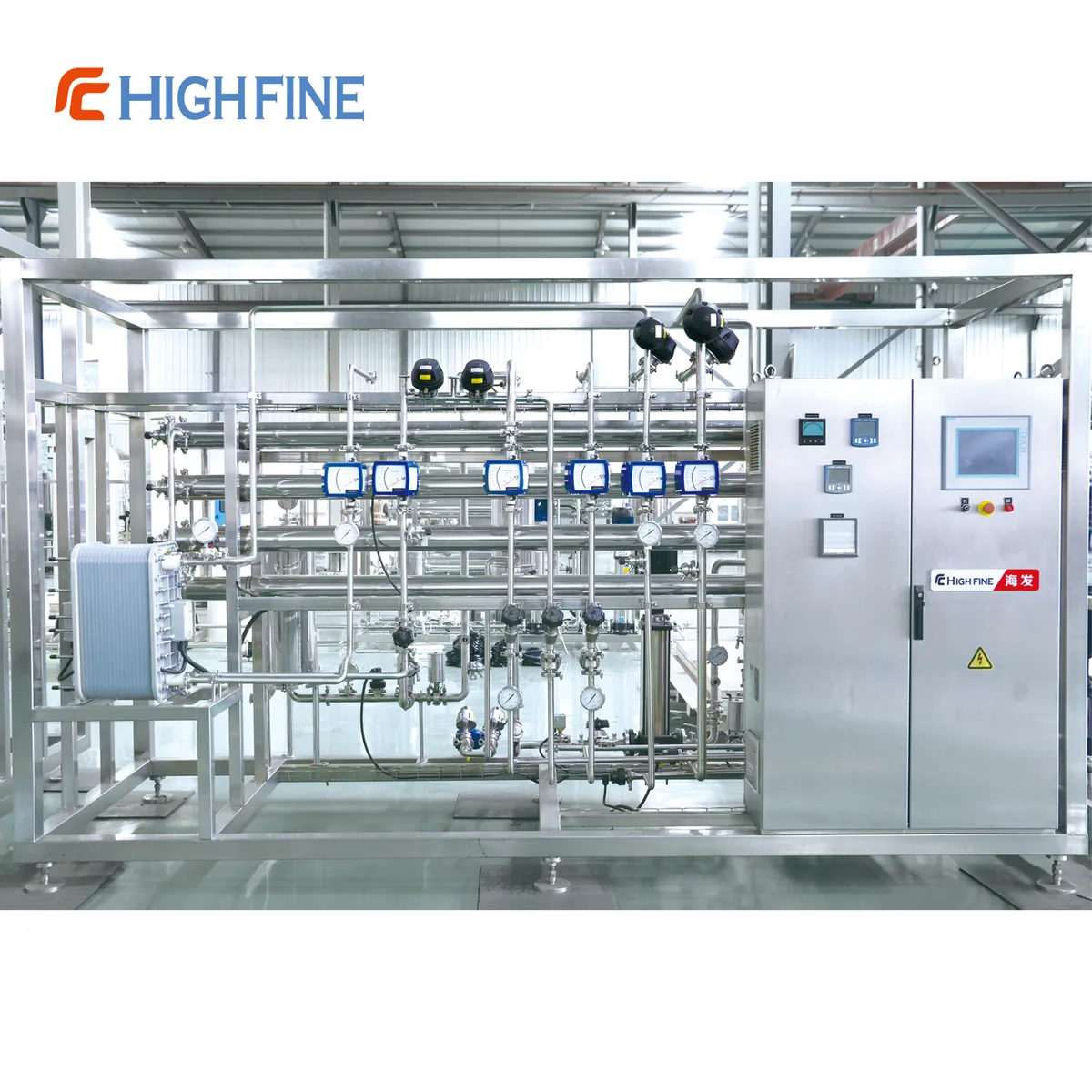
Pharmaceutical water systems must control chemical and microbial quality. Purified water and water for injection are not sterile by definition, but must be produced and distributed to prevent unacceptable microbial proliferation. Tanks, piping, valves, instruments, and dead legs can support biofilm or planktonic bacteria if sanitization is inadequate.
USP, EP, and JP expectations generally require validated sanitization and microbial control; the method is not prescribed. Hot-water, chemical, and ozone programs can be acceptable if designed, validated, and monitored. The method must suit materials, water specification, operating temperature, and cleaning/maintenance programs.
How Ozone Works in a Pharmaceutical Water Loop
Ozone is unstable oxygen produced on site. It oxidizes microorganisms and organic material, damaging cell membranes, proteins, and nucleic acids, with broad activity against bacteria, spores, and biofilm-associated organisms.
Ozone is typically used for periodic sanitization, followed by flushing or destruction before routine use, or in low-level continuous mode with controlled residual maintained in storage/distribution and destroyed before points of use or areas where residual ozone is unacceptable. Mode depends on design and validated control strategy.
Ozone is not persistent; it decays in water at rates influenced by temperature, pH, organic load, and oxidizable materials. Residual monitoring must be location-specific.
Generation, Contacting, and Destruction
An ozone system includes feed gas preparation, generation, contacting, residual control, and destruction. Ozone is commonly generated from oxygen or dry air by corona discharge or electrolytic generation. The ozone-containing gas is contacted with water using reliable mass transfer without unnecessary backpressure or water quality issues. Gas-side safety controls are needed because gas-phase ozone is an occupational hazard.
Destruction is as important as generation. Ozone must be destroyed before water is used where residual oxidant could affect product, resins, membranes, or materials. UV destruction is common for water-side residual control. The UV unit must be validated for intended flow and water quality and monitored; lamp aging, sleeve fouling, and power-supply faults reduce efficiency, so UV intensity monitoring and maintenance are essential.
Gas-side destruction is also required. Off-gas from the contactor and vents should go to a destruct unit. Ozone gas detection and ventilation belong in room and equipment design.
Residual Limits and Water Quality
Ozone residual limits should not be copied from another site. No single universal limit fits every system. The acceptable profile depends on pharmacopeial water quality requirements, product risk assessment, point of use, loop materials, and analytical method.
The strategy should define where residual is measured, how often, and actions when out of range. Periodic sanitization validation should demonstrate adequate exposure and that residual is reduced before routine use. Continuous low-level operation should demonstrate controlled residual within validated range and reliable destruction before points of use.
Pharmacopeial requirements for purified water, water for injection, and other grades are general, not a substitute for system-specific validation. Ozone must not compromise final water quality. Conductivity, TOC, microbial counts, and other attributes still require monitoring.
Material Compatibility: 316L, SUS304, and Elastomers
Ozone is an oxidant, so material compatibility is central. For pharmaceutical water loops, 316L stainless steel is widely used for corrosion resistance and cleanability. HIGHFINE PHARMATECH CO., LTD supplies purified water systems designed for hot-water sanitization, including RO+EDI configurations (15 MΩ·cm) and 2-stage RO+EDI configurations (≤0.1 µS/cm, ≤100 ppb TOC, ≤20 cfu/mL). Whatever the supplier, any loop intended for ozone service requires a specific compatibility review of all wetted materials.
316L alone does not guarantee satisfactory ozone service. Weld quality, surface finish, passivation, crevice geometry, and residual chloride levels affect corrosion risk. Poor welds, incomplete passivation, or stagnant areas can initiate pitting or rouging. Ozone can accelerate oxidation if the passive layer is compromised. Review piping specification, welding/passivation records, valve and instrument wetted materials, gaskets, diaphragms, and sensors.
SUS304 may be acceptable in some applications, but each wetted component should be evaluated. Elastomers and polymers are often limiting; some gaskets, diaphragms, and seals may degrade under repeated ozone exposure. Review all wetted materials, not only main piping. Material changes should be assessed for ozone compatibility and extractables.
TOC and Rouge Considerations
TOC monitoring is important, and ozone can affect the organic profile. Ozone oxidizes organics but does not necessarily mineralize all to carbon dioxide and water. Partial oxidation can convert larger molecules into smaller, more biodegradable compounds, affecting biofilm control and TOC trends. Interpret TOC with microbial data, ozone residual data, and maintenance records.
Rouge is a surface deposit or discoloration associated with iron oxide and stainless steel corrosion. It can be influenced by welding, passivation, water chemistry, stagnation, and oxidants. Ozone can contribute to rouging if residuals are excessive or the passive layer is not properly established and maintained. Do not assume ozone prevents or removes rouge. A robust passivation and inspection program is still needed, including visual inspection of tanks, piping, valves, and spray devices.
If rouge is observed, investigate corrosion, inadequate passivation, chloride attack, stagnation, or another mechanism. Increasing ozone residual to solve rouge is not reliable and may worsen oxidation. Correct the root cause, verify passivation, and confirm the ozone strategy is compatible with materials and water chemistry.
Ozone Versus Hot-Water Sanitization at 80°C
Hot-water sanitization at 80°C is well established. It is chemical-free, and the effect is based on heat. The system must be designed for temperature, including insulation, heat exchangers, thermal expansion, and cooling at points of use where necessary. Validation typically includes temperature mapping and evidence that all parts of the loop reach and maintain the required temperature for the validated period.
Ozone and hot-water sanitization solve the same microbial control problem differently. Hot-water storage at 80°C is simple in concept but energy-intensive and can create heat load. It requires attention to cooling before use and thermal compatibility of sensors, valves, and piping. Ozone allows ambient or lower-temperature operation, reducing energy demand and continuous heat exposure, but adds generation, destruction, residual monitoring, and gas safety requirements.
Ozone is often advantageous when the project wants ambient loop operation, when hot-water storage creates an energy/cooling burden, or when heat management in a large loop is a major constraint. Hot-water sanitization at 80°C may be preferable when the loop and materials are optimized for heat, when the site wants a familiar thermal program, or when ozone compatibility or residual control presents unresolved risks.
Decide early in design. Retrofitting ozone to a hot-water loop requires more than adding a generator: additional instrumentation, injection/contacting points, UV destruction, gas detection, and revised validation may be needed. A loop designed for ambient ozone operation may also require significant changes if hot-water sanitization is later selected.
Ozone Versus Chemical Sanitization
Chemical sanitization can be effective, but it brings storage, handling, rinsing, residue testing, and disposal requirements. Each chemical has its own material compatibility and safety profile. Chemical sanitization is often periodic, and validation must demonstrate distribution throughout the loop, adequate exposure, and residue removal before use.
Ozone offers on-site generation and no traditional chemical storage. Once destroyed, ozone leaves no persistent residual, which can simplify rinsing, but validation is still required. The system must prove ozone distribution, controlled residual, and reliable destruction. Ozone also introduces a gas safety hazard.
Chemical sanitization may be preferred when space for ozone equipment is limited, when established chemical handling and residue-testing programs exist, or when water chemistry or materials are not well suited to ozone. Ozone may be preferred when reducing chemical storage/handling, when continuous low-level sanitization is desired, or when the loop is designed from the start for ozone service.
Monitoring and Validation Aspects
A validated ozone program should cover the lifecycle. Design qualification should confirm the loop, generator, contactor, destruct unit, sensors, and safety controls suit the strategy. Installation qualification should verify materials, connections, instrumentation, and calibration. Operational qualification should challenge defined conditions, including relevant worst cases. Performance qualification should demonstrate consistent routine performance.
Routine monitoring should include ozone residual at defined locations, UV destruction performance, gas detection where applicable, TOC, conductivity, and microbial sampling per the water monitoring program. Schedule sensor calibration/maintenance and control UV lamp replacement. Test alarms and interlocks. Evaluate changes to generator, destruct unit, piping, valves, sensors, or operating sequence through change control.
Validation should address points of use. If ozone is destroyed before points of use, destruction must be reliable, and point-of-use water must meet the same quality requirements. If residual ozone is present anywhere in the loop, validation should define the acceptable range and controls preventing it from reaching product contact surfaces or oxidant-sensitive downstream steps.
Where Ozone Fits in a Practical System Design
Ozone sanitization is a system strategy, not a single equipment item. It requires a loop that tolerates the oxidant, a controllable generation/destruction train, calibratable instrumentation, and validation demonstrating ongoing performance. HIGHFINE PHARMATECH CO., LTD, founded in 1992 and based at No. 379 Zhonghua East Road, Haimen City, Jiangsu Province, China, supplies purified water systems with hot-water sanitization. For WFI and pure steam needs, the company also offers multi-effect and vapor-compression distillers and pure steam generators. Certificates available upon request.
Ozone is not automatically the lowest-risk choice. It is a strong oxidant and must be respected in design, operation, and maintenance. Compare ozone, hot-water sanitization at 80°C, and chemical sanitization against the same criteria: microbial control, material compatibility, energy use, validation burden, safety, maintenance, and lifecycle cost. Document the comparison before finalizing the distribution loop.
FAQ: Ozone Sanitization of Pharmaceutical Water Systems
Is ozone considered a chemical sanitizer in pharmaceutical water systems?
Ozone is a chemical oxidant, but it is generated on site and decomposes in water. It leaves no persistent residual once destroyed. Validation, residual monitoring, material compatibility review, and gas safety controls are still required.
Can ozone be used with 316L stainless steel distribution loops?
316L is common and often suitable, but material specification alone is insufficient. Review weld quality, passivation, surface condition, chloride exposure, and component materials. Elastomers, diaphragms, and sensors can be limiting.
Does ozone sanitization replace hot-water sanitization at 80°C?
Not universally. Ozone can be advantageous for ambient operation, lower heat load, or flexible sanitization. Hot-water sanitization at 80°C may be preferable when the loop is designed for heat, thermal sanitization is the site standard, or ozone compatibility and residual control are not favorable.
How is ozone residual controlled before points of use?
Residual control typically combines system design, controlled ozone addition, UV destruction, and monitoring. The strategy must be validated for the loop, and destruction must be shown reliable under routine and worst-case conditions.
Does ozone affect TOC and rouging?
Ozone can oxidize organics and may change the organic profile. Monitor TOC with microbial and residual data. Ozone can contribute to rouging if the passive layer is compromised or residuals are excessive, so passivation, inspection, and material compatibility programs remain important.
What documentation is available for equipment projects?
Certificates available upon request.
Get a System QuoteTalk to a Water System Engineer
Start the conversation
Talk to a Water System Engineer
30+ years of pharma water projects. No sales script.